Minds4biz Inc.
Business Startup, Advertising and Marketing, Business Growth, & Problem-Solving
Assistance With Incorporating
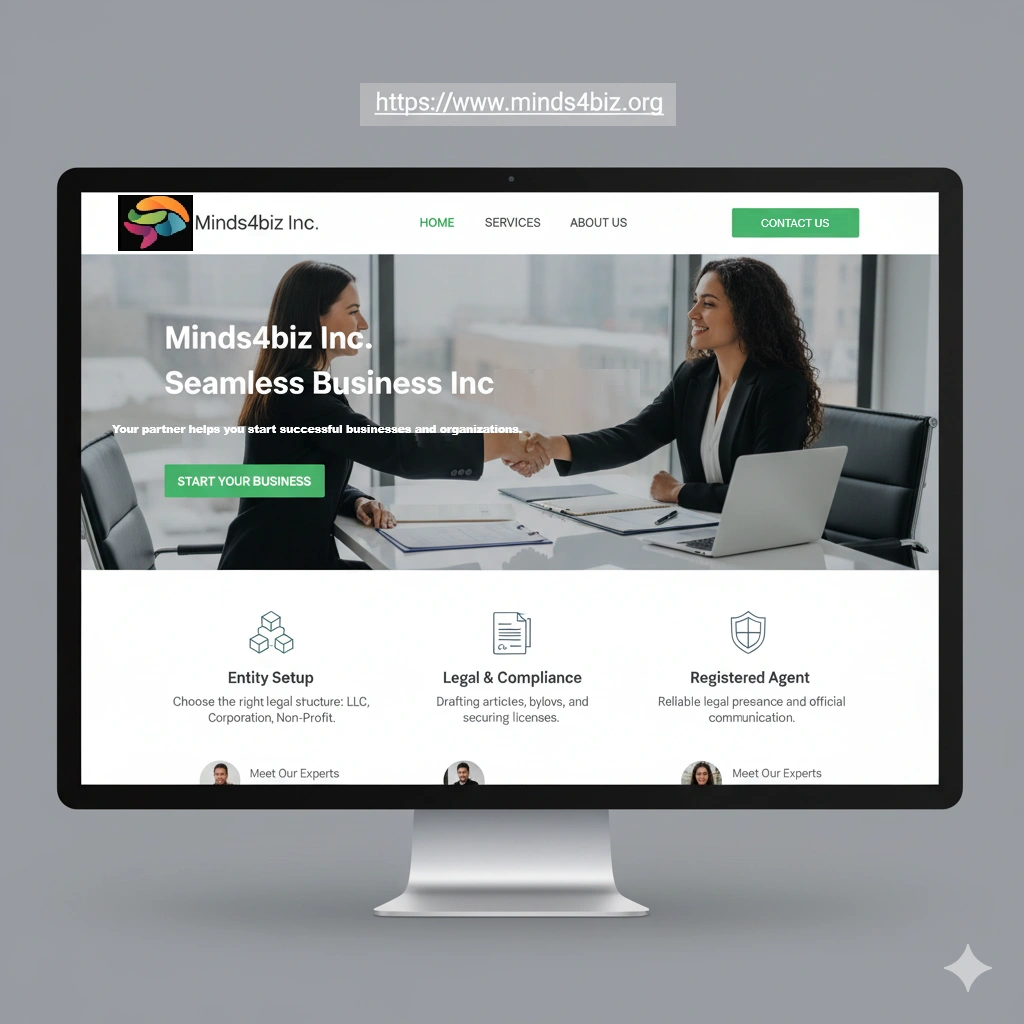
Assistance with Incorporating - Helping You Incorporate Your Business
Starting a business is exciting — but getting the legal, financial, and tax foundations right from Day 1 matters. That’s where an accountant or accounting firm can add real value. At Minds4Biz (or via our Business Incorporation Assistance service), we guide entrepreneurs, nonprofits, and startups through the incorporation process with accounting insight, strategy, and compliance built in.
Here’s why you might want “incorporation consulting” from an accountant, what kinds of consulting topics get addressed, and how subscription-oriented advisory models can support you beyond formation.
Why Do You Need Incorporation Consulting From an Accountant or Accounting Firm?
When you decide to incorporate your business (or change its legal structure), you’re making decisions that will affect taxes, liability, reporting obligations, financing options, governance, and long-term strategy. An accountant brings both compliance know-how and a business advisory perspective. Some reasons to seek consulting include:
Entity selection & liability protection
Deciding which entity to form (LLC, S-corporation, C-corporation, nonprofit corporation, partnership, etc.) influences your personal liability, how profits are taxed, eligibility for grants or funding, governance rules, and ongoing administrative obligations. Accountants help analyze the pros/cons of each.
Tax strategy & compliance readiness
Incorporation affects how you’ll report income, pay self-employment or corporate taxes, manage withholding or sales/use taxes, and possibly payroll taxes later. Getting structured choices right upfront helps optimize your tax burden and ensures regulatory compliance as you grow.
Financial planning & funding readiness
If you plan to seek funding (grants, investors, loans), lenders or investors often expect a clean financial setup, clear governance documents (e.g., bylaws or operating agreements), and forecasting. Accountant-led incorporation consulting can include setup of accounting systems, opening bank accounts under the correct legal name, integrating you with bookkeeping/software tools (e.g., QuickBooks), and projection models for early years.
Governance, internal controls & documentation
Incorporation involves drafting legal documents (articles of incorporation or organization, operating agreement, or bylaws), defining ownership shares or membership interests, establishing internal control policies, deciding what roles officers or managers will have, and planning for future changes or scaling. Accountants working with attorneys or in-house legal counsel can help ensure the financial-governance side is aligned.
Long-term advisory & scalability
Your accountant doesn’t just file the formation paperwork — with incorporation-consulting, you can build in strategic financial advice: budgeting, cash flow modeling, forecasting, compliance schedules, and set up processes so you can scale (hire staff, add payroll, track multiple cost centers).
Peace of mind & risk mitigation
Incorporating incorrectly (or choosing a sub-optimal entity type) can lead to higher tax costs, unnecessary regulatory burden, inability to expand, or complications in ownership transfers/exit strategy. Using an accountant’s advice reduces those risks.
In short, incorporation consulting is part legal-financial strategy, part compliance setup, part futureproofing your business operations with accounting systems that support growth.
How Incorporation Consulting Fits Into Subscription - Style Advisory or Ongoing Account Consulting
Yes, many modern accounting firms offer incorporated support as part of a larger advisory / subscription-style accounting consulting service.
Here’s how incorporation assistance can slot into that model:
Subscription/retainer / fixed-monthly advisory packages
Firms are increasingly moving away from one-off hourly charges and toward subscription-based accounting consulting / advisory services.
Within that subscription, you might pay a flat monthly fee for ongoing advisory plus occasional projects like incorporation, budgeting, financial planning, and tax planning. That gives you predictable pricing and continuous access to your accounting advisor.
Tiered subscription plans
The incorporation process might be included under a “startup / new entity package” tier. For example, you might pay one higher initial setup fee for ongoing monthly advisory (forecasting, CFO-style check-ins, internal controls review). Lower-tier packages might include only basic formation paperwork, while premium tiers include incorporation, governance setting up quarterly advisory calls.
One-time formation + transition to monthly advisory
A model could be you pay an initial consulting fee for incorporation (entity selection, document prep, incorporation filings, setup of accounting system), and then you transition to an ongoing account consulting subscription (monthly or quarterly check-ins, financial reporting review, forecasting, KPI dashboards, compliance reminders).
Fixed monthly pricing & relationship benefits
Subscription-type advisory is beneficial because you get continuous oversight — the accountant becomes part of your team rather than just a vendor. You can ask follow-up questions as the business evolves, incorporate updates (e.g., changes in ownership, tax-code changes, funding events), and maintain alignment between your operations and financial controls.
So, incorporation assistance is often not just a standalone legal-filing service. When paired with an ongoing account consulting subscription, it becomes part of a strategic advisory relationship with your accountant.
Key Accounting & Account - Consulting Topics Related to Business Incorporation
In your “incorporation consulting” engagement (or as part of account consulting services around incorporation), here are the types of topics accountants typically address:
Topic Area – What It Covers
Entity Type & Structure – LLC vs C Corporation vs S Corporation vs Partnership vs Nonprofit; tax elections; shareholder/member rules; ownership allocation; legal vs tax implications.
State & Federal Registration Filing – Articles of Incorporation / Organization; obtaining Employer Identification Number (EIN); registering for state tax IDs, sales/use tax, payroll registrations where applicable.
Bylaws / Operating Agreement / Governance Documents – Drafting or reviewing organizational documents that define roles, ownership, decision-making processes, voting, profit sharing, and management structure.
Initial Capitalization & Ownership Shares – How much capital is being contributed, how equity/member interests are allocated, reflecting that in the accounting/capital accounts; tax basis tracking
Accounting System Setup – Chart of Accounts design; integrating with bookkeeping or accounting software; setting up bank accounts tied to the entity; initial accounting policies (e.g., depreciation policies, revenue recognition rules).
Financial Forecasting / Budgeting for Start-up Phase – Projected revenue & expense forecasts; cash-flow planning; break-even analysis; early-stage capital requirements; funding or grant planning.
Tax Strategy & Entity-Election Advice – Timing of tax elections (e.g., electing S-Corp status); estimating first-year tax liabilities; planning for deductions, tax credits, or deferred tax items; coordinating with annual tax-compliance strategy.
Internal Controls & Compliance Setup – Designing approval workflows, segregation of duties (even for small teams), establishing audit-friendly financial recordkeeping, and compliance calendar/deadlines.
Governance & Risk Assessment – Identifying potential risk areas (e.g., liability, regulatory rules, permits), planning insurance or indemnification clauses, mapping ownership changes, or future sale/exit/dissolution procedures.
Funding / Grant / Investment / Loan Readiness – Preparing your business plan, investor-oriented financials, projections; supporting documentation for loans or grants; scenario modeling; aligning and incorporating choices with fundraising strategy.
Transition / Scaling Advice – As business grows (e.g., hiring employees; adding payroll; multiple locations; branching into new lines), planning how to transition entity structure, expand financial controls, and adapt budgeting & reporting as complexity increases.
Each of these is part of account consulting when tied into your incorporation process. The accountant is not only filing paperwork but helping you think through how your structure, controls, and financial systems will support growth, mitigate risk, and meet compliance obligations from Day 1 onward.
How Minds4biz Could Position Its Incorporation Assistance Service
If I were to tailor this for Minds4Biz’s website:
Define the Offering Clearly
Present “Business Incorporation Assistance” under your business-support / advisory services. We provide account consulting for incorporation — entity structure advice, tax-strategy alignment, accounting system setup, governance & forecast modeling.
This is a Packaged Underwritten Subscription or Tiered Advisory
Consider offering incorporation help as part of a “startup / new entity advisory package.” For example:
Tier 1: Basic Incorporation Consulting & Filing Assistance
Tier 2: Incorporation + Accounting System Implementation + First-Year Budget & Forecasting
Tier 3: Incorporation + Ongoing Monthly Account Consulting for first 12-18 months (e.g., monthly check-ins, KPI reporting, internal-controls review, tax-planning updates)
Clients Should Choose Minds4Biz
Our business professionals’ expertise in advisory accounting, tailored non-profit/small business focus, ability to provide both compliance and strategic forecasting, and commitment to guiding clients beyond formation into growth phases.
Why not schedule a Free Assessment or Consultation, or Virtual Meeting with one of our Sales Specialists, today?
When scheduling, ask the Sales Specialist to “Schedule an incorporation readiness assessment” or “to get an Accountant to share with you their expert opinion on the optimal entity type you should select for your business’s industry and to build your forecasted budget and accounting setup before you Incorporate Your Business or Organization.”
Case Example or Client Story
If possible, ask the Sales Specialist if they can refer you to a blog that is a case study (real or anonymized) of how incorporating assistance early in financial forecasting saved a Company or Organization startup money, enabled them for grant eligibility, and how that case study information can help Businesses or Organizations like yours with business growth potential.
https://chatgpt.com/s/t_690282412a10819192f7a8dbd544b216
Accountant Assistance
https://minds4biz.org/accountant-assistance/